VATRA · THE HEARTHEST. APRIL 28, 1912 RECOGNIZED JUNE 13, 1912

OUR HISTORY · 1912

THE PAN-ALBANIAN FEDERATION OF AMERICA

The Founding
of VATRA

From Many Societies, One Federation.

VATRA emerged from a broader Albanian-American movement that had already built patriotic societies, newspapers, churches, educational initiatives, and community organizations. By 1911, organizers increasingly saw that these societies could act with greater influence together. After months of meetings and negotiations, representatives formally established the Federation in Boston on April 28, 1912.

People from different regional, religious, and organizational backgrounds joined around a shared purpose: sustaining Albanian identity, education and culture, organizing the diaspora, and advocating for Albania’s national interests.

ESTABLISHED APRIL 28, 1912BOSTON, MASSACHUSETTS
READ THE STORY ↓
01THE DIASPORA MOVEMENT

Before there was a federation, there was a movement.

At the turn of the twentieth century, Albanian immigrants in the United States built associations, churches, schools, and a press while following the struggle for national self-determination in their ancestral homeland. Boston and other New England communities became important centers of that activity.

Organizations such as Besa-Besën and newspapers including Kombi and Dielli connected people across distance. VATRA grew from this existing civic landscape—not from a single person or a single event—and offered diverse societies a shared institutional home.

The dates and context here are cross-referenced with contemporary newspaper records and published federation histories. See the sources below.

02THE ROAD TO VATRA · 1911–1912

The Movement
Toward Unity.

Local societies kept their identities while exploring a shared national structure. Federation was negotiated—not automatic—and required discussion about leadership, representation, local autonomy, Dielli, and the direction of Albanian-American activity.

BEFORE VATRA

A growing Albanian-American community begins to organize.

Before the Federation, Albanian immigrants in the United States had formed patriotic, cultural, religious, educational, and mutual-aid societies. These groups helped newcomers sustain language and identity while responding to developments affecting Albania and Albanian communities abroad. Boston became a major center of activity, with newspapers, churches, associations, lectures, fundraising, and political organizing. This civic life supplied the institutional ground from which VATRA emerged.

THE SOCIETIES BEHIND THE FEDERATION

Several organizations.
A common undertaking.

Historical accounts identify these four societies among those central to the movement that produced VATRA. Their appearance in founding narratives does not, by itself, establish that every society held an identical procedural status or delegate arrangement.

01

Besa-Besën

A central Boston society and organizational predecessor

Besa-Besën was one of the most important Albanian-American patriotic societies preceding VATRA. It provided community organization before the Federation existed, was closely connected with the early life of Dielli, and participated in the movement toward a national federation. Its history is associated with Fan S. Noli and Kristo Kirka.

Historical context

Source context: the VATRA founding account and Kristo Floqi’s recollections linked in the historical sources below. Where a formal delegate list or specific meeting role is not established in the supplied material, this page leaves it unstated.

02

Flamuri i Krujës

A society identified in founding accounts

Historical accounts name Flamuri i Krujës among the Albanian-American societies involved in the unification movement. Its place in the network illustrates that VATRA’s formation involved more than one local organization. We do not assign officers, a founding date, or a separate meeting role without corroborating documentation.

Historical context

Source context: the VATRA founding account and Kristo Floqi’s recollections linked in the historical sources below. Where a formal delegate list or specific meeting role is not established in the supplied material, this page leaves it unstated.

03

Shoqëria Kombëtare

A society named in accounts of the founding movement

Shoqëria Kombëtare is identified in historical accounts among the organizations connected with the process that led to VATRA. Its participation belongs within the wider effort to build a national Albanian-American structure; the precise representation and procedural role should be read against the original records.

Historical context

Source context: the VATRA founding account and Kristo Floqi’s recollections linked in the historical sources below. Where a formal delegate list or specific meeting role is not established in the supplied material, this page leaves it unstated.

04

Dallëndyshja

Part of the society network preceding the Federation

Dallëndyshja appears among the Albanian-American societies named in accounts of VATRA’s founding. Its inclusion helps preserve the collective character of the movement; individual delegates and the exact terms of participation are not assigned here without a verified roster.

Historical context

Source context: the VATRA founding account and Kristo Floqi’s recollections linked in the historical sources below. Where a formal delegate list or specific meeting role is not established in the supplied material, this page leaves it unstated.

THE WIDER ALBANIAN-AMERICAN MOVEMENT

Other organizations
in the national movement.

Historical accounts also place the following societies within the wider Albanian-American movement surrounding the creation of VATRA:

  • Mirëbërësja
  • Skënderbeu
  • Malli i Mëmëdheut
  • Përlindja
  • Arsimi

This is not a claim that every organization listed was a formal founding society. Their roles varied across the wider movement, and a precise status is not assigned here without source-specific evidence.

1911 · ORGANIZING & NEGOTIATION

The road
to federation.

In 1911, discussion intensified about consolidating Albanian-American societies. Kristo Floqi, associated with Dielli and organizational work, became an important advocate for federation. Fan S. Noli, Faik Konica, Kristo Floqi, Paskal Aleksi, and other organizers took part in discussions about the proposed structure.

Agreement was not automatic. Participants considered authority, leadership, representation, the relationship between local societies and a national body, Dielli’s role, and the direction of Albanian-American national activity. VATRA’s founding mattered because separate societies and strong personalities were able to reach a shared institutional arrangement.

This account describes the negotiations at a high level; it does not attribute unverified positions or quotations to individual delegates.

APRIL 281912BOSTON, MASSACHUSETTS

THE ORGANIZATIONAL FOUNDING

VATRA
is formed.

On April 28, 1912, Albanian-American representatives meeting in Boston completed the organizational process that created the Pan-Albanian Federation of America VATRA. The Federation brought previously separate societies into a broader national structure—months before Albania declared independence on November 28, 1912.

VATRA became a principal institution through which Albanian-Americans could coordinate advocacy, journalism, education, fundraising, and national activity.

JUNE 13, 1912 · MASSACHUSETTS

Formal recognition.

The Commonwealth of Massachusetts formally recognized the Federation on June 13, 1912. This is distinct from April 28, the date of VATRA’s organizational founding.

APRIL 28Organizational foundingJUNE 13Massachusetts recognition

JULY 1912 · THE FIRST CONVENTION

From provisional work
to a functioning federation.

VATRA’s first convention followed in July 1912 and advanced the Federation’s national organization. The convention helped move the effort from provisional organizing toward a functioning institution, with leadership responsibilities, branches, publications, finances, and national activity taking more formal shape.

Historical accounts identify Faik Konica as elected General Secretary. Other early officer assignments are not expanded here without a verified record.

03THE PEOPLE WHO BUILT VATRA

Founders &
organizers.

THE PEOPLE WHO BUILT VATRA

Founders & Organizers

VATRA was not the creation of a single individual. Its founding resulted from the work of Albanian-American organizers, intellectuals, journalists, community leaders, and patriotic societies that recognized the need for a unified national institution.

Among the most influential figures were Fan S. Noli, Faik Konica, Kristo Floqi, and Kristo Kirka. Each brought a different combination of intellectual leadership, journalism, organizational work, public advocacy, and community service to the movement that culminated in VATRA’s establishment in Boston in 1912. These profiles introduce the broader network of delegates and societies that participated in creating the Federation.

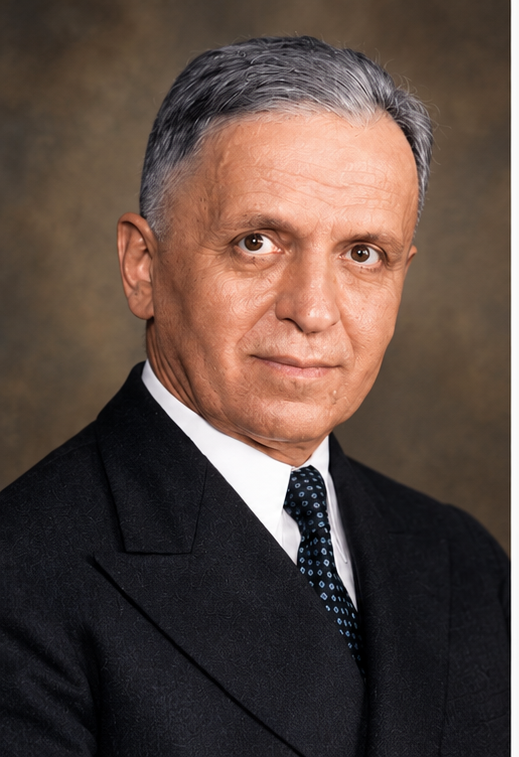
Portrait of Fan S. Noli
Fan S. Noli1882–1965Co-Founder of VATRA

Co-Founder of VATRA · Clergyman · Writer & Translator · Journalist · Statesman

Fan S. Noli

1882–1965

Fan Stylian Noli was one of the central figures in the creation of VATRA and one of the most consequential Albanian intellectual, religious, cultural, and political figures of the twentieth century. Born in 1882, Noli became deeply involved in the development of Albanian cultural and national institutions. In the United States, he helped organize Albanian immigrants around their language, identity, religious life, journalism, and national aspirations. Noli played an important role in the Albanian-American organizations that preceded VATRA and participated directly in the negotiations that led to the Federation’s creation in 1912. His work was closely connected with both Besa-Besën and Dielli, institutions central to the emerging Albanian-American national movement. Following VATRA’s creation, he continued to play an important role in its leadership, public advocacy, and intellectual life. His influence extended far beyond the Federation: he became a prominent Orthodox bishop, writer, translator, scholar, diplomat, and political leader. In 1924, he briefly served as Prime Minister of Albania. His literary translations, religious leadership, historical scholarship, political writings, and advocacy left a lasting influence on Albanian culture in both the United States and Albania. For VATRA, Noli represents the intersection of community organization, journalism, religious independence, education, diplomacy, and national advocacy.
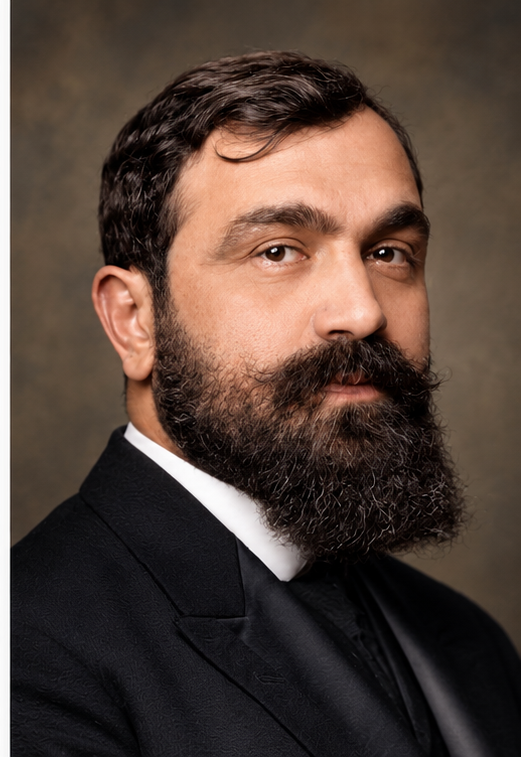
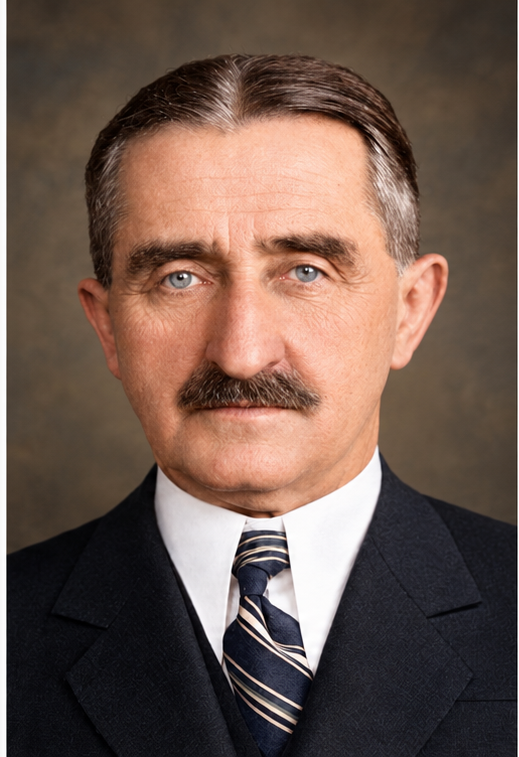
Portrait of Faik Konica
Faik Konica1875–1942Co-Founder and Early Leader of VATRA

Co-Founder of VATRA · Writer · Editor · Diplomat · Intellectual

Faik Konica

1875–1942

Faik Konica was one of the most influential intellectual figures of the Albanian national movement and one of the central architects of VATRA. Born in 1875, Konica received an extensive European education and developed a reputation as a writer, critic, linguist, political thinker, journalist, and cultural advocate. In 1897, he established the journal Albania, which became one of the most influential publications of the Albanian national awakening. Konica later became deeply involved with Albanian-American organizational life. Together with Fan S. Noli, Kristo Floqi, and other organizers, he participated in discussions and negotiations seeking to unite separate societies into a national federation. Following VATRA’s establishment in 1912, Konica became one of its most prominent leaders. He was elected General Secretary at the first convention and became closely associated with Dielli. Konica helped shape VATRA’s intellectual character and its approach to Albanian national affairs, diplomacy, culture, and political advocacy. He later represented Albania diplomatically in Washington. His career brought together literature, journalism, diplomacy, national advocacy, and Albanian-American institutional leadership.

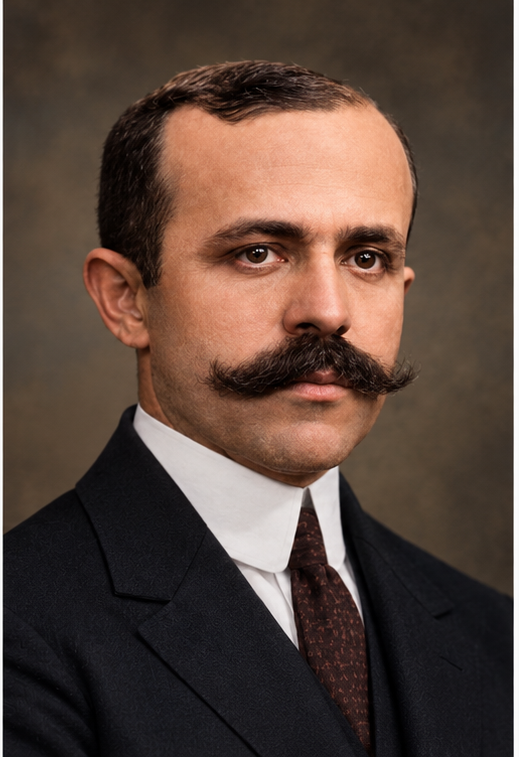
Portrait of Kristo Floqi
Kristo FloqiFounding Organizer of VATRA

Founding Organizer · Lawyer · Journalist · Writer & Playwright

Kristo Floqi

Kristo Floqi played a major organizational role in the movement that resulted in VATRA. A lawyer, writer, playwright, journalist, and political activist, Floqi became deeply involved in Albanian-American affairs during the years immediately preceding the Federation’s establishment. While associated with Dielli in 1911, he strongly advocated for unification of the numerous Albanian-American societies operating independently across the United States. Floqi participated directly in the organizational commission and negotiations concerning the creation and structure of the new Federation. His work included outreach to Albanian societies and efforts to organize branches that would allow VATRA to become a genuinely national institution. His memoirs are especially valuable because they provide a firsthand account of discussions surrounding the Federation’s creation. Those recollections show that VATRA did not emerge automatically or without disagreement: its formation required negotiation among societies and influential personalities with different perspectives on leadership, organization, representation, and strategy. Floqi was one of VATRA’s principal organizational architects.

Portrait of Kristo Kirka
Kristo Kirka1883–1955Founding Leader and Early VATRA Officer

Founding Leader · Besa-Besën Leader · VATRA Officer · Community Organizer

Kristo Kirka

1883–1955

Kristo Kirka was an important early Albanian-American organizer and one of the leaders who helped create the institutional foundations from which VATRA emerged. He played an important role in Besa-Besën, one of the principal Albanian-American societies operating before VATRA’s formation. Through this work, Kirka became part of the organizational network surrounding Dielli, Albanian-American patriotic activity, and the movement toward federation. Following VATRA’s creation, Kirka assumed important organizational responsibilities within the Federation and its publishing activities. He later served in senior VATRA leadership and remained connected to Albanian national affairs. Kirka eventually returned to Albania, where he continued his public activity. After the establishment of Albania’s communist regime, he was imprisoned and died in Burrel Prison in 1955. His life links early Albanian-American organization with the broader political history of twentieth-century Albania.

THE SOCIETIES THAT CREATED THE FEDERATION

From individual leadership
to collective organization.

The Federation emerged through both the work of influential organizers and the organized Albanian-American societies that brought communities into a shared national structure. Besa-Besën, Flamuri i Krujës, Shoqëria Kombëtare, and Dallëndyshja feature prominently in accounts of this process; the wider movement included other societies whose roles should not be conflated with formal founding participation.

Explore the founding societies ↓

ADDITIONAL ORGANIZERS & DELEGATES

More hands
built the institution.

Paskal Aleksi

Named among the organizers involved in meetings and negotiations concerning the proposed federation. The supplied record does not establish a society assignment or a fuller biography.

Llambi Çikozzi

Recognized in the supplied historical material as an additional organizer in the movement around VATRA’s creation. A specific founding-meeting role is not assigned here without a verified delegate record.

Founding delegates & representatives

Historical accounts describe representatives of the societies in the founding process. The supplied materials do not provide a complete delegate list organized by society, so individual society assignments are not guessed or invented here.

BOSTON · FEBRUARY 15, 1909

A newspaper becomes
the voice of a federation.

Dielli began publication in Boston on February 15, 1909, before VATRA existed. It developed within the earlier Albanian-American organizational movement and, after the Federation’s creation in 1912, became VATRA’s newspaper.

Across the community, Dielli carried news and political commentary, supported cultural discussion and communication among Albanian communities, and provided a forum for advocacy concerning Albania.

Explore Dielli’s history → Visit Gazeta Dielli ↗

AFTER THE FOUNDING

Building the
national organization.

After April 1912, the Federation’s task shifted from agreement among societies to sustaining an organization: developing branches, defining leadership and administrative responsibilities, maintaining publications, raising and managing resources, and coordinating national activity.

The first convention in July marked an early step in this development. Branches and membership connected local communities to a national institution while Dielli helped circulate news and ideas across distance.

HISTORICAL METHOD

Formal founding, Massachusetts recognition, and the first convention are distinct events. Society participation is described cautiously where the supplied record does not establish a precise delegate roster or identical legal status for every organization.

04EARLY DIPLOMACY & NATIONAL ADVOCACY

A voice in a consequential moment.

Albania declared independence on November 28, 1912. In the years that followed, its sovereignty and borders were subject to international negotiation and conflict. VATRA’s advocacy in the United States formed one part of a wider Albanian effort involving leaders and organizations in Europe, the Balkans, and the diaspora.

During and after the First World War, the federation supported public advocacy and representation connected to Albania’s future. Albanian-American leaders, including Noli and Konica, pursued diplomatic and public-facing work. The English-language Adriatic Review helped present Albanian perspectives to readers beyond the Albanian-speaking press.

Accounts of Noli’s July 4, 1918 encounter with President Woodrow Wilson at Mount Vernon are part of this advocacy history. The meeting is notable, but it should not be mistaken for a single cause of a diplomatic outcome. The U.S. government formally recognized Albania on July 28, 1922; diplomatic relations were established on December 4, 1922.

05THE PRESS & PUBLIC MEMORY

Reading the record
through its sources.

Newspapers, organizational records, and personal papers are complementary sources for the history of Albanian-American organizing. They document public discussion and community life, but should be read with attention to publication date, authorship, provenance, and historical context.

Library of Congress catalog records provide a reference point for the early chronology and title history of Albanian-language newspapers. The linked source list also includes founding recollections by Kristo Floqi and later institutional histories.

Where recollections or later accounts differ, the page identifies a broad historical conclusion without inventing a delegate list or assigning identical status to every society.

Search Library of Congress newspaper records ↗
1909
A publication before the federation

Dielli’s publication begins before VATRA; the two histories later become closely intertwined.

SOURCE CONTEXT
06INSTITUTIONAL CONTINUITY

A century shaped by rupture and renewal.

The federation’s history unfolded amid changing political circumstances: Albania’s early statehood, world wars, ideological division, migration, and democratic transition. Organizational disagreements and political differences were part of this history; continuity did not mean unanimity.

In 1939, following Italy’s invasion of Albania, representatives associated with VATRA’s Boston and Detroit groups agreed on a reunification framework. In the decades that followed, members and editors sustained an Albanian-American institutional life while connections with Albania were profoundly constrained by the Cold War.

As political conditions changed in the 1990s, Albanian-American communities renewed engagement with Albania and Kosovo. Dielli remains one documentary lens on that period. VATRA marked its centennial in 2012, carrying the record into a second century of community life.

This history belongs to generations of members, leaders, writers, and supporters. It is best understood through evidence and the voices of those who built and sustained the institution.

07A CHRONOLOGY

Milestones, not the whole story.

A concise chronology of documented dates and turning points. Each entry is a doorway to a fuller historical record.

  1. Faik Konica begins publishing Albania, an influential journal of the Albanian national awakening.

    Konica’s journal predates the federation movement and forms part of the Albanian-language press that connected readers and ideas across borders.

  2. Albanian immigrants establish patriotic, religious, educational, and mutual-aid societies in the United States.

    These local associations created practical community networks and helped sustain language, identity, and ties to developments in Albania.

  3. Albanian-language religious and community organization in America expands.

    This period saw continued efforts to build institutions responsive to Albanian-speaking communities in the United States.

  4. Dielli begins publication in Boston before VATRA exists.

    The newspaper arose within the existing Albanian-American organizational landscape and later became closely associated with the Federation.

  5. Organizers and societies pursue negotiations for a national Albanian-American federation.

    Kristo Floqi, Fan S. Noli, Faik Konica, Paskal Aleksi, and others are identified in the supplied account as participants in the organizing movement.

  6. Representatives organize VATRA in Boston; contemporary founding accounts locate the meeting at 227 Tremont Street.

    This is the Federation’s organizational founding date—not the later date of Massachusetts recognition.

  7. The Commonwealth of Massachusetts formally recognizes the Federation.

    Legal recognition is a separate milestone from the April 28 founding.

  8. VATRA’s first convention advances the Federation’s national organization.

    The convention helped formalize the institution; the supplied historical account identifies Faik Konica as elected General Secretary.

  9. Albania declares independence.

    VATRA had been organized months earlier, during a consequential period for Albanian national life.

  10. VATRA develops branches, publications, fundraising, advocacy, and institutional activity.

    The Federation’s growth depended on local societies, members, officers, journalists, and supporters across the Albanian-American community.

  11. VATRA and Albanian-American leaders contribute to broader advocacy around Albania’s postwar future.

    The Federation’s efforts formed part of a wider Albanian advocacy movement; its influence should not be presented as the sole cause of diplomatic outcomes.

  12. The United States recognizes Albania on July 28; diplomatic relations are established December 4.

    These two dates distinguish the United States’ formal recognition from the establishment of diplomatic relations.

  13. After Italy invades Albania, representatives from VATRA’s Boston and Detroit groups agree on reunification.

    The reunification framework was an organizational response to a changed political and community context.

  14. The federation and its publication continue across political divisions and changing generations.

    The historical record describes continuity alongside disagreement, migration, and political change.

  15. Dielli records diaspora attention to democratic change and events in Kosovo.

    The newspaper offers one documentary lens on Albanian-American engagement during this period.

  16. VATRA marks a century since its founding.

    The centennial commemorated one hundred years since the Federation’s April 28, 1912 organizational founding.

08FOUNDING DOCUMENTS & HISTORICAL SOURCES

Follow the sources.

Selected institutional histories, newspaper records, and government documentation. Links open the source publication; interpretations on this page are deliberately qualified. The owner-supplied research also identifies Kalendari i Vatrës i motit 1918, edited by Fan S. Noli; an accessible archival record or page citation was not supplied for direct linking.

  1. 01VATRA founding account — Gazeta Dielli
  2. 02Kristo Floqi’s recollections of the founding
  3. 03Library of Congress: historic Albanian newspapers
  4. 04U.S. Department of State: recognition of Albania
  5. 05The Adriatic Review — digitized issues
  6. 06VATRA and Dielli in the 1930s — Gazeta Dielli
  7. 07VATRA’s 1920s cultural and political context — Gazeta Dielli
  8. 08Dielli coverage of Kosovo in 1990 — Gazeta Dielli

Archival materials are identified by source and provenance where available.

ESTABLISHED IN 1912 · CARRIED FORWARD BY GENERATIONS

Remember with care.
Continue with purpose.

VATRA’s history is not only a record of its past. It is a shared inheritance—and a responsibility to preserve evidence, honor collective effort, and make room for the generations still to come.

Connect with VATRA →